
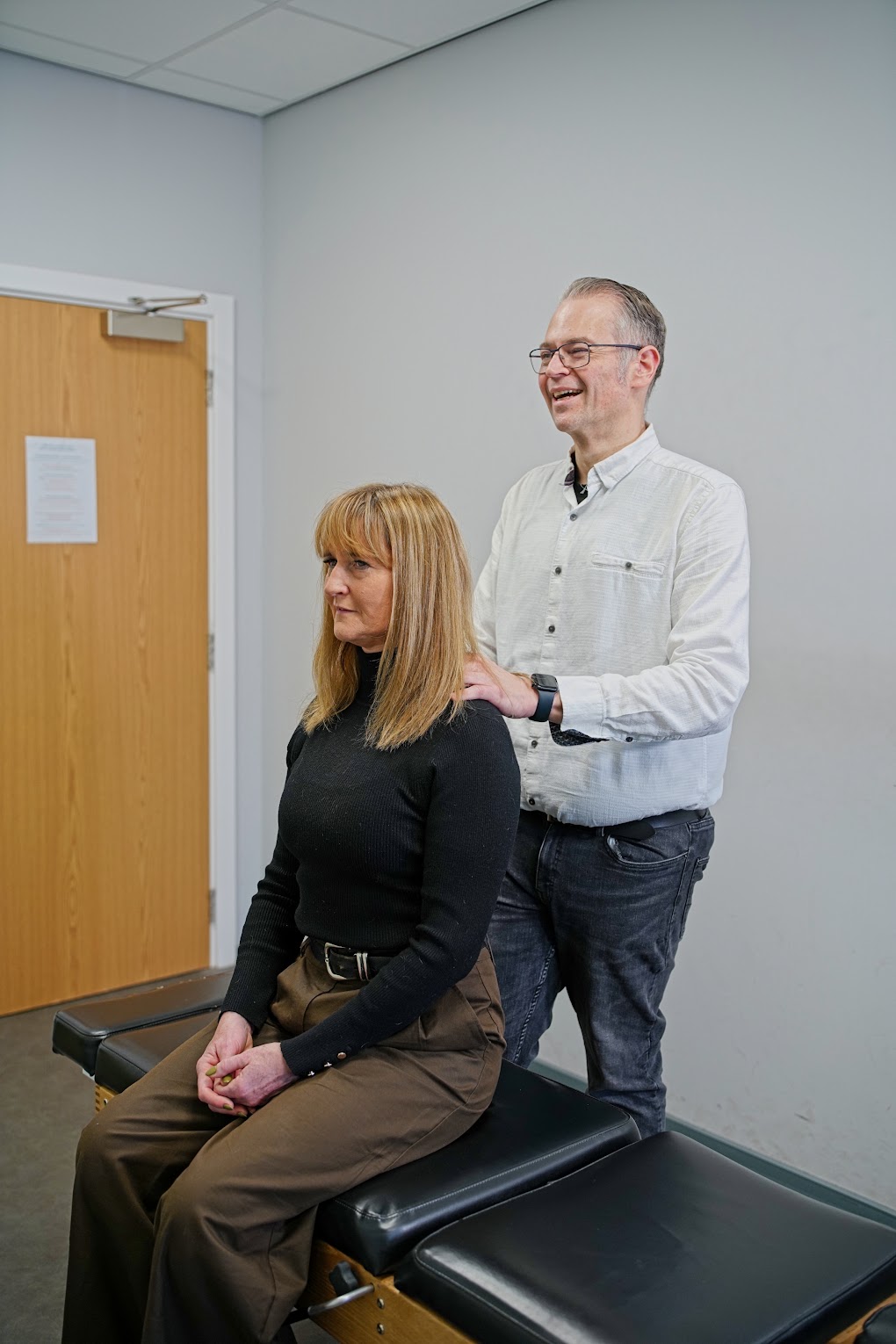
At Daventry Chiropractic, our chiropractors take time to understand what you have been experiencing. They assess how your body is moving and explain how they can help.
Neck pain
Neck pain can make simple movements uncomfortable.
Turning your head, checking your blind spot or looking down at your phone may become difficult. You might notice an ache, soreness or difficulty moving your neck and shoulders comfortably.
Some people also feel discomfort across their upper back or at the base of their skull. Neck pain can follow lifting, sport, an accident or another sudden strain. It can also develop gradually through prolonged sitting, screen use or repeated movements.
What can cause neck pain?
Neck pain can have many possible causes. It may follow an injury, a change in activity or spending too long in one position.
Working at a screen, driving, lifting and repeated movements may all influence how your neck feels. Sleep, stress and changes in your routine may also affect your symptoms.
Sometimes, there is no obvious moment when the pain began.
Understanding your symptoms and how they affect your life helps your chiropractor decide how best to support you.
Shoulder pain
Shoulder pain can affect much more than your shoulder.
You may find reaching overhead, putting on a coat, fastening clothing or lifting objects uncomfortable.
Sleeping on the affected side may become difficult. Shoulder pain can also affect work, exercise, sport and everyday tasks around the home. You might notice pain at the front, side or back of your shoulder. Some people also experience discomfort around the shoulder blade, neck or upper arm.
What can cause shoulder pain?
Shoulder pain may follow lifting, sport, repetitive movements or an accident.
It can also develop gradually through changes in activity or repeated use. The shoulder works closely with the neck, upper back and arm. How these areas move together may influence how your shoulder feels and functions.
Different problems can cause similar symptoms, so the location of your pain does not always explain the cause. Our chiropractors assess your symptoms and movement before deciding how best to support you.
Headaches
A headache can turn an ordinary day into something you simply endure. Even manageable pain can drain your concentration, patience and enjoyment.
You may feel pressure across your forehead, aching behind your eyes or pulsing around your temples.
Some people feel pain at the back of their head, neck or upper shoulders. Headaches may last for a few hours or return repeatedly. They can leave you worrying about when the next one will start.
Can neck pain and headaches happen together?
Neck pain and headaches can happen together, but headaches can have many possible causes. Some people notice headaches alongside discomfort at the base of their skull, neck or shoulders. Looking down at a phone, working at a screen or staying in one position may affect how your neck feels.
Your neck, upper back and shoulders work together throughout the day. Changes in how these areas move may contribute to discomfort for some people.
Understanding your symptoms and how they affect your life helps your chiropractor decide how best to support you.
What are cervicogenic headaches?
Headaches linked to the neck are sometimes called cervicogenic headaches. They may be felt at the base of the skull, on one side of the head or around the eye. Neck movement or discomfort may occur alongside the headache.
However, several types of headache can feel similar.
Your chiropractor can assess your neck, upper back and shoulders and explain what they find.
How can chiropractic care help?
Chiropractic care can help some people with neck pain, shoulder pain or headaches.
Your chiropractor will shape your care around your symptoms, movement and everyday needs.
They will consider how your neck, spine, shoulders and surrounding joints are moving. They will also consider how your symptoms affect your work, sleep, exercise and everyday activities.
Where appropriate, they may use hands-on techniques alongside movement advice and other suitable care.
The aim is to help you move more comfortably and reduce the impact your symptoms have on your life.